
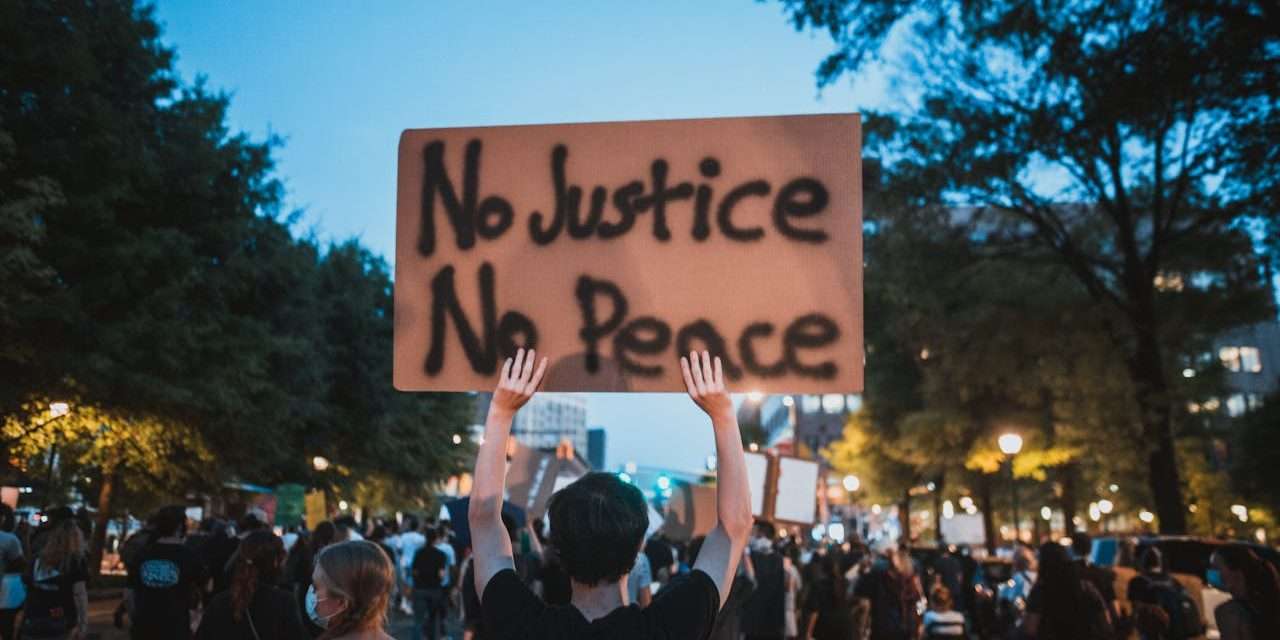
The Epstein Case forces us to confront uncomfortable truths about justice. Not just about who committed crimes, but about who the system protects, who it fails, and how easily power can distort accountability.
Many thoughts rattle around in my brain concerning the Epstein case. But two never stop.
First, the case fuels conversations that frame sexual health, sexual wellness, and sexuality itself as indecent behavior. As something that you should never discuss. Instead of separating abuse from healthy sexuality, some have blurred the lines, treating discussions of sexual health and sexual expression as inherently indecent. As if sex itself is the problem, rather than exploitation, coercion, and violence.
Second, the justice system has taken its time in charging others involved beyond Epstein and Maxwell.
From time to time, there are moments when we are forced to confront an uncomfortable truth with justice on who it protects, who it fails, and how easily it bends. The Epstein case is one of those moments. Epstein was accused and later charged with sex trafficking of minors, with allegations spanning over a decade. Survivors described being recruited with false promises only to be groomed, manipulated, and abused.
Years after the initial charges, investigations, and document releases, I find myself appalled and deeply disappointed not only by the years of sex trafficking itself, but by how the public conversation drifts away from the young girls who were harmed.
A simple question remains: What will justice look like for those who were hurt?
Justice is slow. It is procedural. It is often imperfect. And for Epstein and Maxwell’s survivors, it is deeply personal.
Several survivors have chosen to speak publicly, attaching their names and faces to painful histories in order to demand recognition and reform, as seen in the Super Bowl LX ad. Their courage has reshaped public understanding of trafficking and coercion.
When we turn a blind eye, the behavior continues. When we only discuss it occasionally, the behavior continues. Epstein was not the only offender. Neither was (Ex)Prince Andrew the only powerful figure connected to this case.
The danger in cases like this is not only the abuse itself. It is the erosion of trust that follows. When wealth and influence appear to shield wrongdoing, survivors are left feeling the system was never built to protect them. The Epstein case symbolizes how power can silence victims.
Even a glance at the released emails makes one thing clear. The exploitation was not random. The messages, written by well-connected men, contained back-and-forth planning and anticipation about participating in the island’s activities. Epstein and Maxwell did not operate in isolation. Their operation appeared organized, sustained, and protected.
For the survivors, the abuse happened during years that should have been marked by safety and growth. Instead, those years were shaped by trauma and betrayal. The long-term impact on their mental and sexual health cannot be measured in headlines or financial settlements. It shows up in disrupted education, strained relationships, and a lingering sense of injustice.
When Epstein died in federal custody in 2019, the public reaction was explosive. As the spectacle grew, something quieter risked being overshadowed: accountability for the survivors.
What also concerns me is how easily conversations spiral away from reform and toward gossip. The emails. The connections. The powerful names. It is hard not to see how organized and protected the abuse appeared to be. But if we stay stuck in spectacle, we lose the point.
The point is that abuse happened.
The point is that systems allowed it to continue.
When we look away, it continues. When we treat it like tabloid drama, it continues.
This case is not just about one man. It is about what happens when wealth and influence seem to shield wrongdoing. That erosion of trust may be one of the most lasting harms of all.
Keeping the focus where it belongs would mean:
- Listening to survivors without demanding every painful detail
- Holding institutions accountable, not just individuals
- Strengthening protections for vulnerable minors
- Making reporting systems safer and more transparent
Justice should not only be about punishment. It should be about recognition. About saying clearly: this mattered. What happened was wrong.
Any sexual activity should be consensual from start to finish, whether it is a hook-up, a one-night stand, a sex party, or an intimate night between partners. When society gives permission to talk openly about sexual experiences, whether they go wonderfully right or painfully wrong, it helps people understand that sex itself can be removed from the shadows where exploitation thrives.
Justice is not about satisfying public curiosity. It is about restoring dignity. It is about proving that no amount of power or status outweighs someone’s humanity.
It is about refusing to let spectacle drown out the people who were hurt.
Free guide when you subscribe
Enjoyed this? Get Say It Out Loud, free.
Our menopause conversation guide: what to say to your doctor, your therapist and your partner, plus a symptom tracker. Subscribe free and it lands in your inbox, with $10 off the shop and new stories twice a month.
No spam. Unsubscribe in one click.


